Narciso
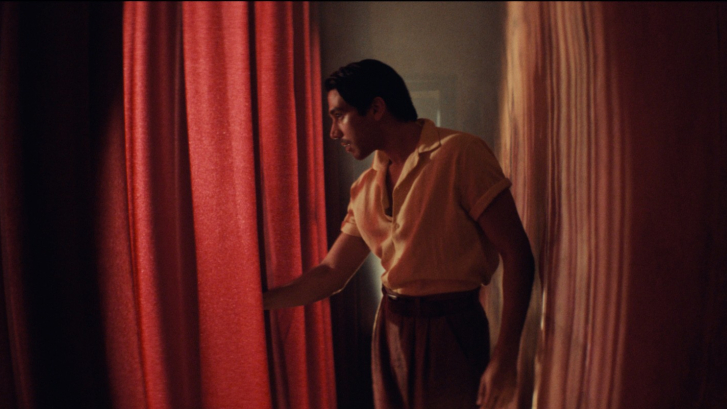
Paraguay, 1959. Asunción vibrates for the first time with a foreign rhythm. Rock ’n’ roll has found its way onto the radio carrying heat, speed and the faint illusion that the times might suddenly move forward. The city feels younger, looser – briefly out of sync with itself. At the same time, another rhythm settles in. Slower. Heavier. A disciplined pulse that orders gestures, silences voices and redraws the limits of what can be seen or desired. Words like virtue, decency, tradition begin to circulate with unusual force, shaping a shared fear. In this charged atmosphere, the charismatic musician Narciso becomes a symbol of freedom. His youth, his body, his way of inhabiting the night resonate with the music and with the threat it carries. Desire becomes visible. And visibility, dangerous. What once passed unnoticed now attracts attention, suspicion, judgment. As the regime consolidates its power, morality determines the situation – both intimate and oppressive. The future does not disappear all at once; it tightens. It learns to watch itself. Between dance and discipline, a new order takes shape, and an entire generation feels it closing in.
details
-
Runtime
101 min -
Country
Germany, Brazil, Portugal, Spain, France, Paraguay, Uruguay -
Year of Presentation
2026 -
Year of Production
2026 -
Director
Marcelo Martinessi -
Cast
Diro Romero, Manuel Cuenca, Arturo Fleitas, Margarita Irun, Mona Martinez, Nahuel Perez Biscayart -
Production Company
La Babosa Cine, Pandora Film Produktion, Bocacha Films, Esquina Produções, Oublaum Filmes, BTeam Prods, La Fabrica Nocturna Cinéma, Guay Films -
Berlinale Section
Panorama -
Berlinale Category
Feature Film
pictures from the movie


Biography Marcelo Martinessi
Born in Asunción, Paraguay in 1973, he is a director and screenwriter. He studied communication in his hometown, followed by film at the London Film School. His short films, which revolve around literature and memory, have screened at festivals including the Berlinale and Clermont-Ferrand. He was executive director of his country’s first public television station from 2010 up to the coup d’état in 2012. His attempt at coming to terms with the ensuing political chaos gave rise to his short film La Voz Perdida (The Lost Voice), which won Best Short at the 2016 Venice International Film Festival.
Filmography Marcelo Martinessi
2016 La Voz Perdida